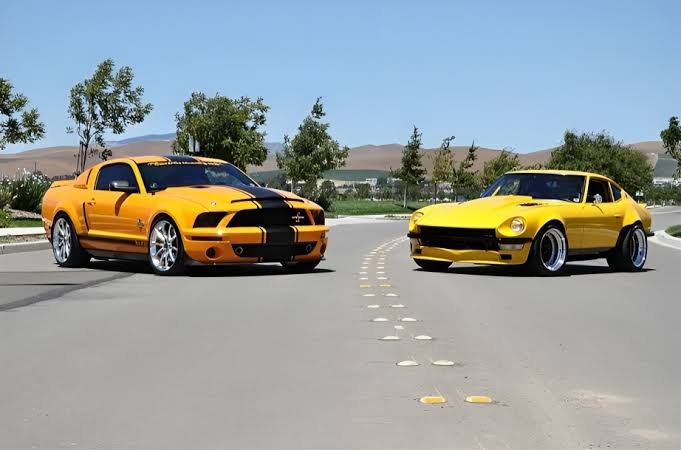
For decades, “Japanese cars are more reliable” has been treated almost like a law of nature in the auto world. But the 2026 data tells a more layered story — one where American brands are closing gaps in some categories while Japanese automakers keep a firm grip on others. Here’s how the two actually compare once you look past the old assumptions
What the 2026 Studies Actually Show
Two major studies shape most reliability conversations each year: J.D. Power’s U.S. Vehicle Dependability Study (VDS), which measures problems reported by original owners after three years of ownership, and Consumer Reports’ annual reliability rankings, based on survey data from hundreds of thousands of owners.
According to J.D. Power’s 2026 study, the Lexus IS was named the most dependable model overall, with Lexus also ranking as the highest brand for a fourth straight year. On the mass-market side, though, the story shifts. Buick topped the mass-market segment for the second consecutive year, actually beating Toyota in the process, while Buick and MINI rounded out the top three overall, with several Japanese brands finishing well above the industry average.
Consumer Reports tells a somewhat different version of the same year. Its 2026 rankings, compiled from data on 380,000 vehicles over the past year, put Toyota, Subaru, and Lexus at the top as the three most reliable brands — the same trio as 2025, just reshuffled in order. Seven of the ten most reliable brands in that ranking are either Japanese or Korean, with American rivals trailing behind aside from Buick, which cracked the top ten in eighth place.
So depending on which study you trust, the headline changes: J.D. Power shows American brands making real inroads, while Consumer Reports still shows Japanese brands firmly in control at the top.
Where American Brands Are Actually Winning
The clearest area of American strength is size. J.D. Power’s data shows Americans consistently build large vehicles well — the Chevrolet Tahoe, for instance, is the only large SUV to meet or exceed its segment average. That trend isn’t limited to one model either; out of 25 vehicles that scored above their segment average, nine came from American brands.
Trucks are where the gap becomes most obvious. In the large light-duty pickup category, American brands essentially stand alone, continuing a decades-long grip on the segment. If you’re comparing an F-150, Silverado, or Ram against anything Japan currently offers in that class, the domestic trucks still set the bar.
Luxury vehicles are another surprising bright spot. Cadillac has been shown to outpace German rivals in some categories — the XT6, for example, has topped both the BMW X6 and Porsche Cayenne in J.D. Power’s rankings. And Buick’s dependability run isn’t a fluke limited to one study; it also ranks highly in J.D. Power’s Vehicle Dependability Study as the most reliable American automaker on the market, and not by a small margin.
Where Japanese Brands Still Dominate
Once you move away from large vehicles and into cars, compact SUVs, and hybrids, the traditional pattern reasserts itself. The story changes when you move to smaller vehicles, and that’s exactly where Japanese brands pull ahead.
Consumer Reports’ 2026 data backs this up directly: cars — sedans, hatchbacks, and wagons — remain the most reliable vehicle category overall, followed by minivans and SUVs, with pickups ranking last. That vehicle-type breakdown happens to favor exactly the segments where Japanese brands are strongest.
Individual models reinforce the point. Consumer Reports’ 2026 study, covering 53,000 American motorists, puts Lexus, Toyota, and Subaru at the very top, with the Toyota Corolla praised for an unbeaten dependability record and the Toyota Highlander noted as a family SUV that rarely breaks down. Even in the compact SUV segment specifically, the Toyota RAV4 and Mazda CX-5 have shown especially strong predicted reliability.
Hybrids are also a clear Japanese strength. Consumer Reports has noted that Toyota’s reliability has actually improved further in recent years, with both the Tundra and Camry scoring better than before.
The Industry-Wide Problem Neither Country Has Solved
Interestingly, the biggest reliability headache in 2026 isn’t really an American-versus-Japanese issue at all — it’s software. Vehicle dependability fell to a record low in 2026, driven largely by software and connectivity issues that continue to frustrate owners across nearly every brand. The industry-wide average now sits at 204 problems per 100 vehicles, an increase of two problems per 100 vehicles compared to 2025, and four of the top five most commonly reported issues are directly tied to mobile phone integration, including Android Auto and Apple CarPlay connectivity, which has been the single biggest complaint industry-wide for three years running.
In other words, whether you buy American or Japanese in 2026, you’re statistically more likely to have an issue with your infotainment screen than with your engine or transmission. Mechanical reliability has actually improved in many areas even as technology-related complaints keep climbing.
What This Means for Buyers
If you’re shopping trucks or full-size SUVs, American brands — Chevrolet, GMC, Ford, and even Cadillac in the luxury space — currently have the stronger reliability track record, according to J.D. Power’s latest data. If you’re shopping sedans, compact SUVs, or hybrids, Japanese brands like Toyota, Lexus, and Subaru still hold a clear and fairly consistent edge across both major studies.
Buick stands out as the one American brand doing something unusual: performing well in both major rankings, in a segment where Japanese dominance has historically been hardest to challenge.
Reliability data also isn’t static from year to year, and the gap between the two countries has clearly narrowed compared to a decade ago. Whichever brand you lean toward, checking the specific model — not just the country of origin — remains the more useful way to shop in 2026.