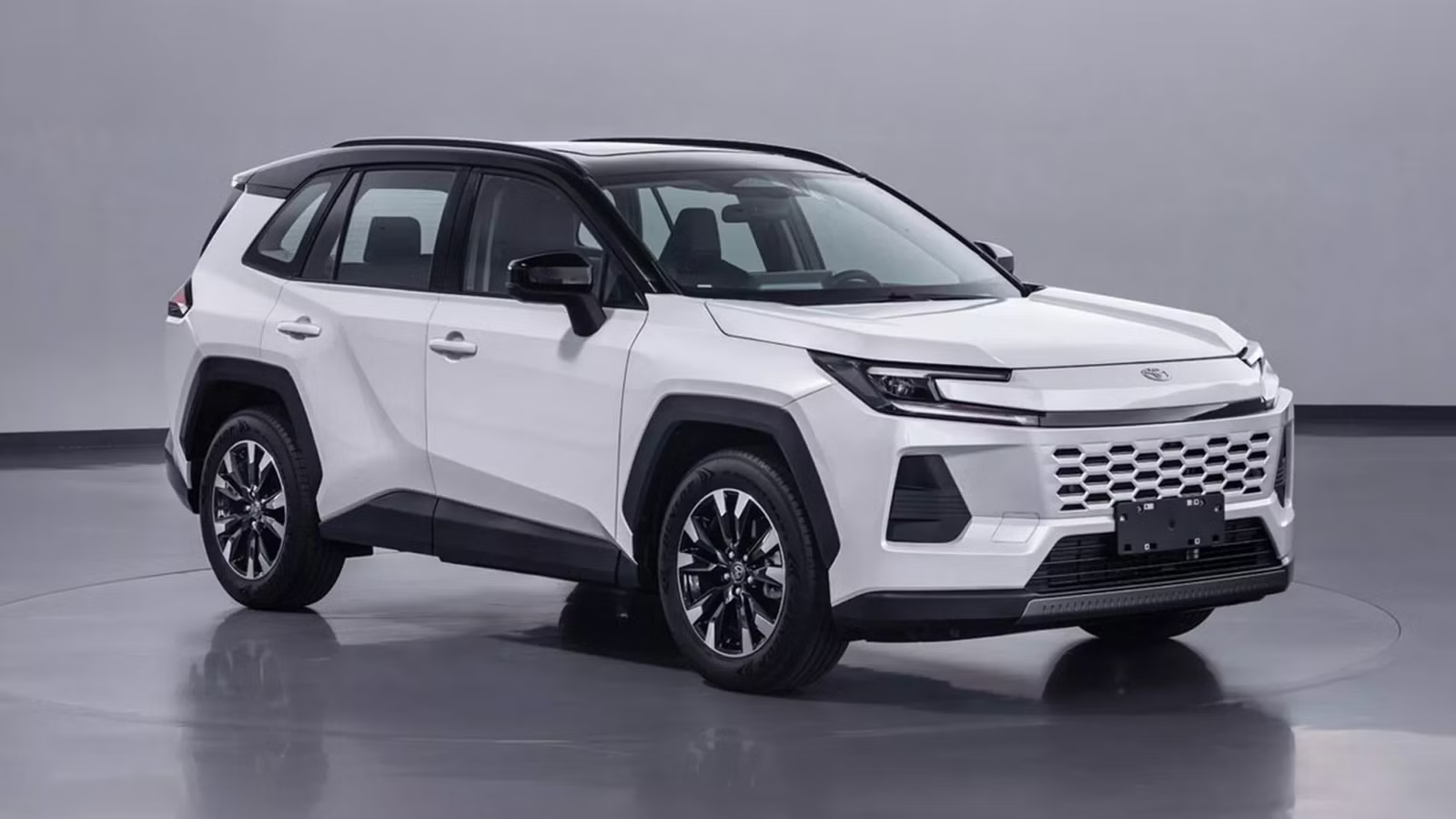
The RAV4 has been America’s best-selling non-truck vehicle for years, but 2026 marks the biggest shift in its history: Toyota has dropped the gas-only engine entirely. Every sixth-generation RAV4 now comes as a hybrid or plug-in hybrid, and that single decision is reshaping who’s cross-shopping this SUV — and why so many buyers are switching over to it this year.
Hybrid Is No Longer the Upgrade — It’s the Standard
For years, buying a RAV4 Hybrid meant paying a premium over the base gas model. That calculation is gone in 2026. Every trim, from the entry-level LE up to the loaded Limited, comes standard with a hybrid powertrain. There’s no gas-only option left to fall back on, and no upcharge to unlock better mileage anymore — it’s simply how every RAV4 is built now.
That shift changes the math for a lot of shoppers who previously skipped the hybrid to save money upfront. The 2026 RAV4 starts at $33,350 including destination, which is roughly $2,100 higher than last year’s gas-only starting price — but you’re now getting a hybrid standard instead of paying extra to add one. Some outlets have pointed out that when you compare like-for-like, an all-wheel-drive 2026 hybrid actually costs only about $450 more than last year’s equivalent hybrid trim, despite the redesign, more power, and added technology.
More Power, Meaningfully Better Fuel Economy
The new hybrid system produces 226 horsepower in front-wheel-drive form, up from 219 horsepower in the outgoing gas model, and 236 horsepower with all-wheel drive. For buyers who want more performance, the plug-in hybrid variant gained 18 horsepower for 2026, pushing its combined output up to 324 horsepower — a genuinely quick number for a compact SUV.
Fuel economy is where the switch really pays off. The most efficient front-wheel-drive hybrid trims are rated as high as 43 to 48 mpg combined, a major jump from the roughly 30 mpg the old gas-only RAV4 delivered. Even the least efficient 2026 trims, like the Woodland and GR Sport, still manage around 37 mpg combined. The plug-in hybrid adds an EPA-estimated electric-only range of around 50 miles on top of that, meaning many owners with home charging access could handle daily commuting almost entirely on electric power alone.
For someone driving 12,000 to 15,000 miles a year, jumping from 30 mpg to the mid-40s adds up to real, noticeable savings at the pump — often enough to offset that higher starting price within a few years of ownership.
A Genuinely New Interior and Tech Suite
The redesign isn’t just under the hood. Every 2026 RAV4 comes with a 12.3-inch digital instrument cluster standard, along with a 10.5-inch central touchscreen on most trims and a larger 12.9-inch touchscreen on the XSE, Limited, and GR Sport. The new infotainment system runs on Toyota’s Arene software platform, which enables 5G connectivity and over-the-air updates — something Toyota has historically lagged behind rivals like Hyundai and Kia on.
Every RAV4 also gets Toyota Safety Sense 4.0, the latest version of Toyota’s driver-assistance suite, bundling more capable adaptive cruise control, lane-keeping, and collision-avoidance technology than the outgoing generation offered. Wireless Apple CarPlay and Android Auto come standard across the board.
The exterior has also gone boxier and more rugged-looking, which Toyota says is meant to improve road presence while keeping the RAV4’s compact, easy-to-park footprint intact. The chassis has been reinforced as well, which reviewers have noted results in a quieter, calmer ride than the outgoing model, even though overall dimensions haven’t changed much.
Who’s Actually Switching, and Why
A few buyer profiles stand out as the ones driving this shift:
Budget-focused commuters who previously bought the cheapest gas RAV4 are now getting hybrid fuel economy without seeking it out, since there’s no gas-only trim left to choose instead. Families who wanted a hybrid but couldn’t justify the old price premium are finding that gap mostly closed, especially in FWD form. Tech-focused buyers who felt Toyota’s infotainment lagged behind competitors now have a genuinely modern system to point to, with the larger screen and Arene platform available on upper trims. Buyers with home charging access have a stronger reason than ever to consider the plug-in hybrid, given its expanded electric-only range and the biggest horsepower bump in the lineup.
Even buyers who simply want the security of Toyota’s reputation for dependability are switching in, since the RAV4 nameplate carries one of the strongest reliability track records in the industry, even as it undergoes a full redesign.
A Few Trade-Offs Worth Knowing
The switch isn’t free of caveats. Some reports on the redesigned RAV4 note that in the safety data published so far, the new generation fell short of IIHS Top Safety Pick criteria, and full NHTSA ratings hadn’t been issued yet at the time of testing — worth checking before you buy if crash-test credentials are a priority.
The driving experience also still prioritizes efficiency and comfort over engagement. The CVT and comfort-tuned suspension are built for smooth, economical driving rather than sharp handling, so buyers looking for a sportier compact SUV may find more satisfaction elsewhere. Interior materials, while solid and functional, also aren’t as plush as what some competitors offer at similar price points.
None of that has slowed the shift, though. With hybrid power now the default rather than the exception, better mileage across the board, a real technology upgrade, and pricing that’s barely moved compared to last year’s hybrid trims, it’s easy to see why so many shoppers who once considered the RAV4 “just” a reliable commuter SUV are now treating the hybrid as the obvious, no-compromise choice.